
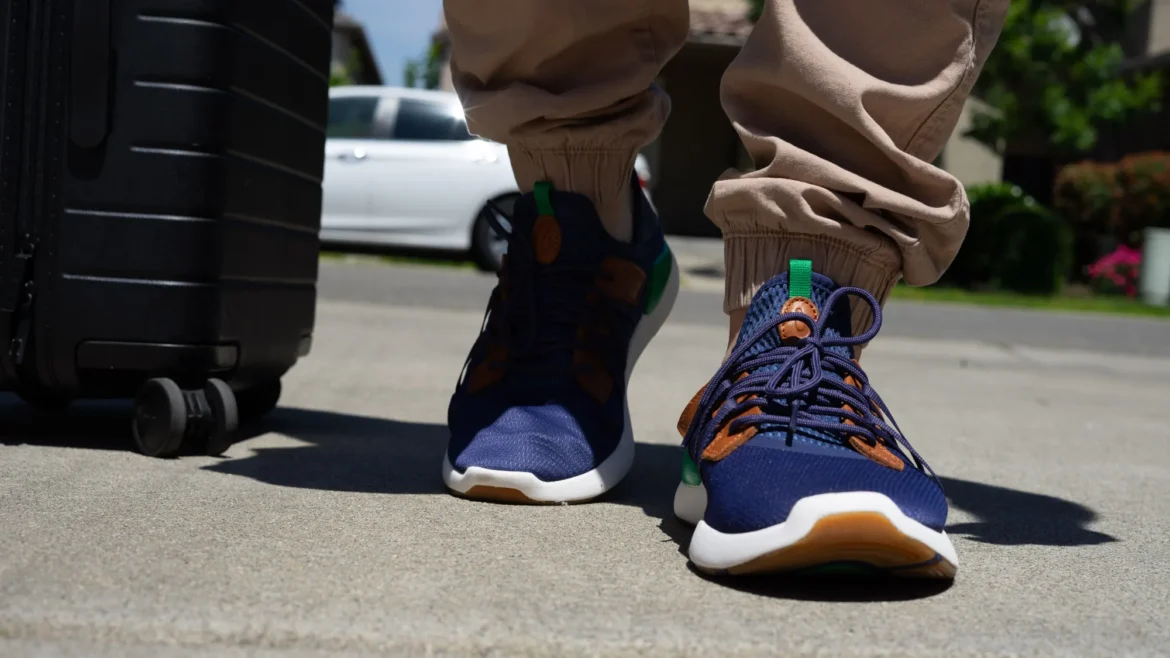
Few travel experiences match the romance of wandering through historic European old towns, colonial mountain villages, or centuries-old maritime quarters. Yet few things turn that romance into physical misery faster than the pavement underfoot. Historic thoroughfares—from the polished limestone of Dubrovnik and the basalt pavers of Rome to the hand-chiseled granite squares of Lisbon—were engineered for horse-drawn carts and iron-rimmed carriage wheels, not for lightweight modern footwear.
Travelers routinely pack their favorite lifestyle sneakers or broken-in loafers, only to find themselves limping back to their hotel by mid-afternoon with bruised arches, aching calves, and tender knees. The problem is rarely a lack of fitness; it is a fundamental mismatch between the biomechanics of modern walking shoes and the physics of historic stone streets.
Surviving twenty thousand steps a day across uneven stone requires looking past marketing promises of walking on clouds. Selecting the right travel shoe demands an understanding of sole architecture, torsional rigidity, traction dynamics, and foot containment.
The Physics of Historic Pavement: Why Cobblestones Break Normal Shoes
Walking on poured asphalt or engineered concrete allows the foot to move through a predictable, repetitive gait cycle. The heel strikes, the foot rolls smoothly forward through midfoot stance, and the toes push off against a flat, uniform plane.
Cobblestones, setts, and river flagstones shatter this rhythm entirely.
First, the contact plane is never flat. Individual stones sit at slight angles, tilt downward toward drainage runnels, and feature gaps where mortar has worn away over centuries. With every step, your foot lands on an unpredictable slant. This forces the micro-muscles of your ankles, calves, and plantar fascia to fire continuously to prevent your ankle from rolling.
Second, centuries of foot traffic and rainfall polish natural stone until it takes on the slickness of polished marble. When morning mist or afternoon rain settles over smooth basalt pavers, the friction coefficient drops dramatically.
Finally, traditional masonry transmits shock directly back into the skeletal frame. Soft, unsupportive shoes allow the sharp corners and convex crowns of individual stones to concentrate force directly into your metatarsal heads, producing deep, agonizing stone bruises that can sideline you for the remainder of a trip.
Structural Anatomy: What to Look For in a Resilient Walking Shoe
A shoe capable of conquering ancient stone requires a deliberate balance of flexibility, protection, and grip. When evaluating footwear for a walking-heavy itinerary, dissect the shoe into four critical components.
The Torsional Rigidity Test
Before inspecting styling or materials, pick up the shoe and perform a quick physical diagnostic. Hold the heel in one hand, grasp the forefoot with the other, and twist the shoe in opposite directions like wringing out a wet cloth.
If the shoe twists easily into a spiral, leave it on the shelf.
Shoes with high torsional flexibility allow your foot to twist along with every tilted cobblestone it strikes. That twisting movement forces your ankle joints and peroneal tendons to bear the burden of stabilization. A cobblestone-ready shoe must possess a stiff internal shank—typically made of molded composite, fiberglass, or hardened nylon—that resists lateral twisting while still allowing the shoe to bend naturally at the ball of the foot. That stiffness acts as a bridge, creating a stable, level platform beneath your foot no matter how crooked the stone underneath happens to be.
Outsole Compound and Tread Geometry
The bottom of the shoe is your sole defense against slick, wet paving. Many contemporary lifestyle sneakers use exposed EVA foam on the outsole to shave off weight. On damp cobblestones, exposed foam functions like ice skates.
Look for a true rubber outsole made from a high-friction, vulcanized compound. Rubber compounds formulated for approach shoes, trail running, or heavy utility work offer exceptional grip across wet rock.
Tread design matters just as much as material. Avoid deep, aggressive hiking lugs; they reduce the total surface contact area on hard stone and can catch awkwardly in deep crevices between pavers, creating a tripping hazard. Instead, prioritize a dense, relatively low-profile tread with multi-directional siping—fine grooves cut into the rubber that channel water away from the contact patch.
Midsole Density: Why Firmer Is Better
The biggest mistake modern travelers make is assuming maximum softness equals maximum comfort. Ultra-plush, marshmallow-soft foams feel luxurious during a five-minute test walk around a carpeted retail store. Over eight hours on uneven stone, they become a liability.
Overly soft midsoles compress unevenly under the weight of an angled stone. When a plush sole bottoms out beneath your heel or the ball of your foot, it creates instability, exaggerating pronation and forcing your joints to overcompensate.
Seek out medium-density polyurethane (PU) or firm, high-resilience compression-molded EVA. Firmer midsoles provide progressive dampening: they absorb the initial shock of the stone while maintaining structural integrity, preventing individual rocks from pressing up through the footbed.
Upper Containment and Heel Security
When navigating steep, cobblestoned hills—such as those in Edinburgh, Lisbon, or Montmartre—your foot naturally tries to slide inside your shoe. On descents, an unsupportive upper allows your toes to jam painfully into the front of the toe box. On ascents, an insecure heel counter lets the heel lift, causing blister-inducing friction against the Achilles tendon.
A cobblestone-worthy shoe must lock the foot securely across the instep and around the heel cup. Look for a structured heel counter that does not collapse under thumb pressure, paired with a reliable lacing system that allows you to customize tension across the midfoot. Breathable, durable uppers made from treated leather, tight technical mesh, or reinforced suede hold their shape under lateral stress far better than loose, stretchy knit fabrics.
Common Footwear Traps to Avoid
Packing space is limited, which makes footwear errors costly. Knowing what to leave out of your suitcase is just as critical as knowing what to pack.
-
Maximalist Running Shoes: Road running shoes with massive stack heights lift your center of gravity too far above the ground. Pairing an elevated stack height with uneven pavers creates a lever arm that significantly increases the severity of an ankle roll.
-
Minimalist and Barefoot Shoes: While zero-drop, ultra-thin footwear works well on natural dirt trails and gym floors, it offers almost zero protection against pointed stone crowns. Without adequate rock-plate shielding or dense midsole material, metatarsal bruising is nearly guaranteed after a full day on historic masonry.
-
Slick Leather-Soled Dress Shoes: Fine leather outsoles look sharp in European dining rooms, but they have zero grip on worn stone. If you want a dressier profile for dinners, choose shoes with factory-installed rubber commando soles or thin rubber protective caps over the leather.
-
Flat-Soled Fashion Sneakers: Inexpensive canvas sneakers and classic tennis shoes often feature wafer-thin rubber soles and flat, unsupportive foam inserts. They lack the torsional stiffness and arch support required to prevent plantar fascia fatigue across multi-day walking trips.
Styles That Combine Trail-Grade Function with Urban Aesthetics
You do not need to look like you are preparing to summit an alpine peak just to walk through Florence or Prague. Several footwear silhouettes deliver the structural support of a light trail shoe while blending seamlessly with casual travel wardrobes.
Structured Heritage Sneakers
Look beyond generic athletic runners and seek out walking-specific or retro-trail sneakers built with full-perimeter leather or suede overlays. These styles often feature firmer, dual-density midsoles, rigid heel clips, and durable carbon-rubber outsoles. Choose neutral colorways like off-white, slate, or tobacco, which pair easily with chinos, denim, and tailored trousers while resisting visible street dust.
Low-Profile Chelsea or Lace-Up Boots
A high-quality boot provides natural ankle stability and protection from drafts and puddles. Chelsea boots built on walking lasts with elastic gussets and low-profile lug soles offer exceptional versatility. They transition effortlessly from morning museum queues to upscale evening dinners. Ensure the boot features a contoured footbed with decent arch support rather than a completely flat interior.
Technical Walking Shoes and Approach Hybrids
Footwear designed for climbing approaches or fast-packing blends sticky rubber outsoles with rigid, protective underfoot plates and durable leather or abrasion-resistant canvas uppers. Many modern brands now produce these technical shoes in understated, single-tone leather designs that look entirely at home in historic city centers while handling broken, wet terrain with ease.
The Real-World Preparation Protocol
Finding the right shoe is only half the battle; how you prepare the shoe and your feet dictates your actual comfort on the road.
Never bring a brand-new pair of shoes on an overseas trip without a thorough break-in period. Wear your chosen pair for at least two weeks before departure, ideally while walking on mixed surfaces, climbing stairs, and carrying a weighted daypack. This allows the upper materials to mold to your foot shape, softens any stiff pressure points around the ankle collar, and reveals hot spots while you are still close to your home closet.
Pay equal attention to what sits inside the shoe. Factory insoles in lifestyle footwear are notoriously flimsy, often consisting of thin, flat foam that disintegrates after forty-eight hours of heavy use. Replacing factory liners with structured, aftermarket orthotics that feature a rigid heel cradle and targeted arch support can transform an average shoe into an endurance platform.
Finally, pair your footwear with medium-cushion merino wool socks. Merino wool naturally regulates foot temperature, wicks away sweat, cushions the impact of each stride, and minimizes the shear friction that causes blisters on warm, humid stone streets.
Arriving Ready for the Journey
A successful trip is measured in the sights you take in, the conversations you share, and the historic neighborhoods you uncover, not the miles of pain you endure between landmarks. Historic stone streets have outlasted empires, and they will easily destroy footwear that prioritizes superficial trends over biomechanical support.
By prioritizing torsional stiffness, firm and responsive cushioning, secure foot containment, and dependable rubber grip, you protect your body from unnecessary fatigue. Choose footwear built to handle the realities of ancient engineering, and you can spend your days looking up at centuries of architecture instead of staring down at your aching feet.